
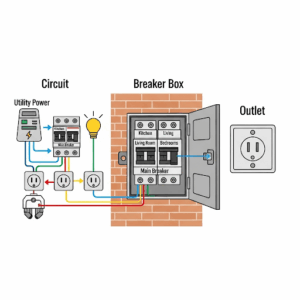
As a homeowner, understanding the basics of electricity is crucial for maintaining a safe and efficient household. While you don’t need to be an electrician, having a grasp of fundamental electrical terminology can help you communicate effectively with professionals, troubleshoot minor issues, and make informed decisions about your home’s electrical system. In this blog post, we will explore some essential vocabulary terms every homeowner should know about electricity in their homes.
Circuit:
- A circuit refers to a complete path through which electricity flows. It consists of a power source (typically the main electrical panel), conductive wiring, and various electrical devices (such as outlets, switches, and fixtures) connected in a loop. Understanding circuits is essential for identifying and troubleshooting electrical issues.
Voltage:
- Voltage, measured in volts (V), is the electrical force that pushes current through a circuit. Most residential homes operate on a standard voltage of 120 volts in North America and 230 volts in many other parts of the world. Appliances and devices are designed to work at specific voltage levels, so it’s important to match their requirements to your home’s electrical system.
Current:
- Current, measured in amperes (A) or amps, represents the flow of electricity through a circuit. It indicates the amount of electrical charge passing through a point in a given period. Understanding current is crucial for sizing wires, breakers, and fuses correctly to prevent overload and electrical hazards.
Breaker:
- A breaker is a safety device located in the main electrical panel or subpanels. It is designed to protect circuits from overload or short circuits by interrupting the flow of electricity when necessary. Breakers can be reset after they trip, while fuses need replacement. It’s important to know the location and purpose of breakers in your home for safety and troubleshooting purposes.
Grounding:
- Grounding provides a path for electrical currents to dissipate safely into the ground in the event of a fault. It protects against electric shock and prevents electrical fires. Grounding involves connecting electrical devices and metal components to the earth via grounding wires and rods. Understanding grounding ensures the safety of your electrical system.
Outlet:
- An outlet, also known as a receptacle, is a device installed in walls or fixtures that allows you to connect electrical appliances and devices. Common types of outlets include standard 120-volt outlets, 240-volt outlets for high-power appliances, and specialized outlets like GFCI (Ground Fault Circuit Interrupter) outlets used in areas prone to moisture.
GFCI:
- GFCI, or Ground Fault Circuit Interrupter, is a type of outlet or breaker that protects against electrical shock caused by ground faults. Ground faults occur when electrical current leaks outside the intended path, such as through a person or water. GFCI outlets are commonly found in kitchens, bathrooms, garages, and outdoor areas.
Wattage:
- Wattage measures the rate at which electrical energy is consumed by a device. It determines the amount of power an appliance or light bulb uses. Understanding wattage helps you choose the right bulbs, assess the energy consumption of appliances, and prevent overloading circuits.
Being familiar with basic electrical vocabulary empowers homeowners to communicate effectively with professionals, troubleshoot minor electrical issues, and maintain a safe home environment. By understanding terms like circuit, voltage, current, breaker, grounding, outlet, GFCI, and wattage, you can make informed decisions about your electrical system, ensure safety, and potentially save money in the long run. Remember, while knowledge is empowering, it’s crucial to seek professional assistance for any electrical repairs or modifications beyond your expertise.
If you need help with a project contact Sharp Electric at (480) 531-4656 or visit www.Phoenixsharpelectric.com to explore your options today.